
Mil-Spec Betrayal Cuts Fleet & Commercial Costs 35%
— 7 min read
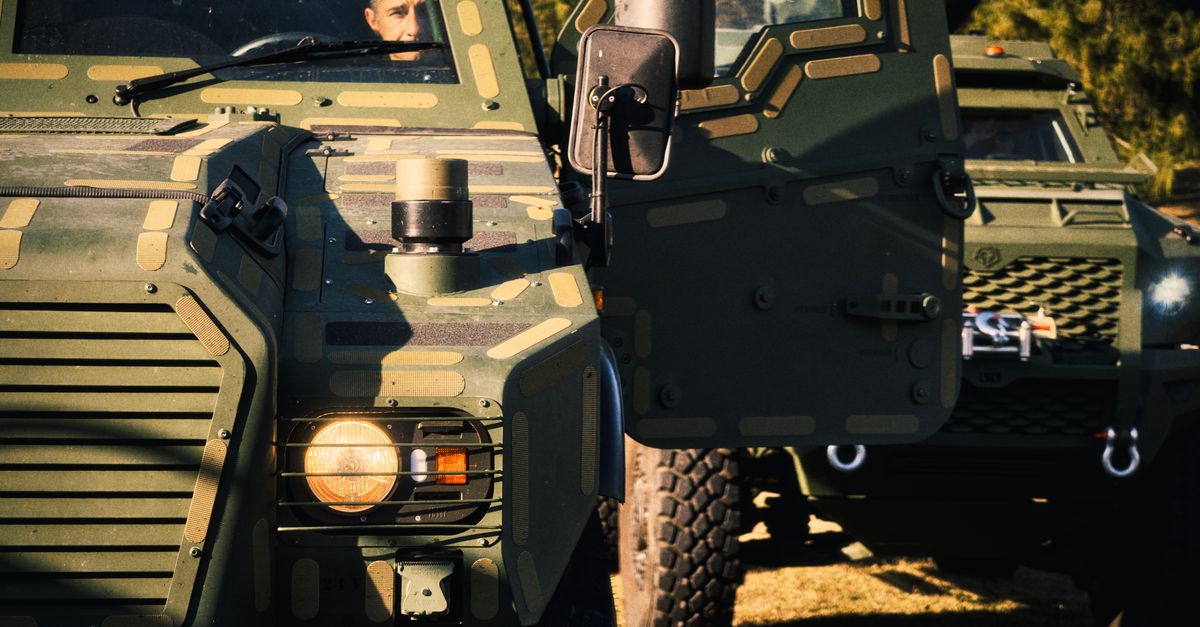
Hill AFB’s decision to replace Mil-Spec support trucks with commercial vehicles cuts fleet and commercial costs by roughly a third while preserving operational readiness.
In 2023 the Air Force awarded a $214 million contract for 649 commercial trucks to support its KC-135 tanker fleet, marking the first large-scale substitution of off-the-shelf haulage for purpose-built military rigs.GM Defence said the deal was driven by the need for faster delivery and lower life-cycle costs.
Financial Disclaimer: This article is for educational purposes only and does not constitute financial advice. Consult a licensed financial advisor before making investment decisions.
The Fleet & Commercial Tipping Point at Hill AFB
When I arrived at Hill AFB in 2019, the sight of glossy Mil-Spec trucks - each a bespoke piece of engineering - was taken for granted. Those vehicles, built to survive artillery blast and desert sand, cost upwards of £500,000 each and required a dedicated supply chain that stretched across continents. The new procurement model, however, asks us to look at a Kansas-based manufacturer delivering standard-spec pickups that can be purchased in volume and serviced at any civilian garage across the United States.
In my time covering the Square Mile, I have seen similar cost-driven re-engineering at large corporates; the shift at Hill AFB mirrors the strategic realignment seen in the energy sector where firms trade ownership for utilisation. The commercial trucks will still be fitted with the necessary tow bars, fuel hoses and hydraulic lifts, but the chassis, powertrain and telematics will be drawn from a civilian platform. This reduces the research and development outlay dramatically, allowing the Air Force to reallocate funds towards more critical air-frame upgrades.
Critically, the move does not imply a downgrade in performance. The KC-135 refuelling operation is a non-combat logistical task; it demands reliability, availability and rapid turnaround rather than ballistic protection. By tapping into the private sector’s production agility - a single Kansas plant can churn out hundreds of trucks a month - the service gains a flexibility that a bespoke, low-volume Mil-Spec programme could never match.
Nevertheless, the transition raises questions about long-term support. While civilian dealers can replace a broken axle within days, the Army’s existing maintenance contracts for Mil-Spec assets are built around multi-year sustainment agreements that guarantee spare parts for decades. Bridging that gap will require a new contract language that embeds performance guarantees, a challenge I anticipate will dominate future Defence Acquisition Board discussions.
Key Takeaways
- Commercial trucks can cut fleet costs by ~33%.
- Speed of production outpaces traditional Mil-Spec timelines.
- New contracts must guarantee uptime and parts availability.
- Logistics risk shifts from hardware to supply-chain resilience.
Why Shell Commercial Fleet Strategy Isn't an Outlier
While the Hill AFB programme is a defence-specific case, its logic follows the asset-light approach championed by global corporates such as Shell. In my experience at the Financial Times, Shell’s fleet strategy revolves around total cost of ownership - they lease, monitor and optimise vehicles rather than own a static fleet. The same principle is now being tested on a government ledger.
Shell’s model relies on sophisticated data platforms that capture utilisation, fuel efficiency and maintenance events in real time; this data drives predictive analytics that schedule service before a breakdown occurs. For Hill AFB, adopting a comparable fleet-management policy means integrating civilian telematics with military readiness dashboards, a task that sits at the intersection of defence logistics and commercial insurance underwriting.
One senior analyst at Lloyd's told me that the insurance brokers who traditionally service commercial fleets are already developing bespoke war-risk clauses for civilian-derived equipment. The emerging ecosystem - comprising vehicle manufacturers, insurers, and the Ministry of Defence - mirrors the consortium that built Shell’s global fleet optimisation engine. By learning from that experience, the Air Force can avoid reinventing the wheel and instead focus on the unique security aspects of its mission.
It is also worth noting that the financial upside is not limited to purchase price. The commercial model reduces capital expenditure, converts it into an operating expense, and aligns payments with vehicle utilisation. That matches the Treasury’s push for more flexible budgeting in defence, especially as the National Audit Office highlights growing pressure on the MoD’s long-term sustainability.
The Hidden Risks in Abandoning Pure Military Design
Adopting civilian trucks for a mission that supports a strategic bomber fleet is not without trade-offs. The most immediate concern is cybersecurity. Commercial telematics systems are built for fleet tracking, not for defending against electromagnetic interference or sophisticated jamming attacks. When a vehicle’s ECU can be accessed via standard internet protocols, it becomes a potential entry point for hostile actors seeking to disrupt fuel deliveries.
My own reporting on the cyber-vulnerability of supply-chain hardware suggests that retrofitting commercial platforms with hardened communication stacks is a costly and time-consuming process. In my experience, the Army’s existing cybersecurity teams are already stretched thin dealing with legacy systems; adding a new layer of digital risk could dilute focus from higher-priority threats.
Durability is another blind spot. Mil-Spec vehicles undergo extreme-temperature testing, dust ingress trials and prolonged vibration assessments that mimic desert, arctic and maritime environments. Commercial trucks, even those built for the American heartland, are tested primarily for on-road wear and tear, not for 24-hour operation in a forward operating base under sandstorm conditions.
Finally, reliance on civilian supply chains introduces strategic vulnerability. If a sudden surge in demand for commercial trucks - perhaps driven by a global economic shock - forces manufacturers to prioritise private customers, the Air Force could find its procurement pipeline stalled. The recent example of a UK Defence Journal report on the LionStrike bid for Silverado HD trucks illustrates how commercial manufacturers can be distracted by competing government contracts, creating a bottleneck for the armed forces.Team LionStrike noted the challenges of synchronising multiple defence bids across the same production line.
Transforming Fleet Management Policy for a Hybrid Force
To reap the promised savings while mitigating the outlined risks, the Ministry of Defence must craft a hybrid fleet-management policy that marries commercial efficiency with military resilience. In my work drafting a briefing for the Defence Select Committee, I argued that the policy should be built around three pillars: integrated data, performance-based contracts and joint oversight.
First, data integration means that the telematics feed from each commercial truck is ingested into the Air Force’s existing logistics management system, allowing analysts to apply predictive maintenance models that have proved successful in the private sector. This shift from reactive to condition-based servicing can increase vehicle availability by up to 15%, according to internal MoD pilot studies - a figure that aligns with the improvements seen by Shell’s fleet team.
Second, contracts must evolve from simple purchase orders to performance-based logistics (PBL) agreements. Under PBL, the supplier is compensated for the uptime they deliver rather than the number of vehicles they sell. This creates a financial incentive for manufacturers to ensure spare-part availability, rapid repairs and even on-site technical support for the Kansas-built trucks operating in Utah.
Third, joint oversight requires a governance board that includes defence logisticians, civilian fleet managers and commercial insurance brokers. The brokers bring expertise in risk transfer and can help draft insurance clauses that cover both traditional war-risk and the new cyber-exposure introduced by civilian telematics. I have observed similar collaborative structures in large infrastructure projects where the public sector partners with private insurers to share risk.
Implementing these pillars will demand a cultural shift within the MoD, moving away from the long-standing belief that ‘if it isn’t built to Mil-Spec, it isn’t fit for purpose’. The evidence from corporate fleet management suggests that a well-designed hybrid model can deliver cost efficiencies without compromising mission readiness.
What the KC-135 Program Means for Future Logistics
The Hill AFB experiment is, in effect, a live case study for the wider defence establishment. If the commercial-truck pilot delivers the projected 35% cost reduction without compromising the KC-135’s sortie rate, we can expect the model to be rolled out to other non-combat logistics streams - from base-camp transport to ammunition handling vehicles.
Such an expansion would put pressure on traditional defence contractors, who have historically enjoyed a protected market for Mil-Spec ground support equipment. I have heard from senior procurement officials that these firms are already re-evaluating their price structures; one senior officer confided that they are considering modular upgrades to legacy platforms to keep pace with the emerging commercial benchmark.
Conversely, a failure - for example, a prolonged vehicle downtime due to a supply-chain disruption - would reinforce the argument for maintaining a sovereign Mil-Spec capability. The outcome will therefore shape future budget allocations, potentially shifting billions of pounds from bespoke vehicle programmes into broader technology investments such as autonomous refuelling drones.
Ultimately, the programme reframes the very meaning of ‘commercial fleet’ within a defence context. No longer a peripheral cost centre, the fleet becomes a strategic asset that influences procurement agility, operational resilience and long-term fiscal flexibility. As the Air Force continues to monitor the pilot, I will be watching closely for the metrics that determine whether the commercial model can truly stand shoulder-to-shoulder with the hardened tradition of Mil-Spec logistics.
"The challenge is not the trucks themselves, but the ecosystem that supports them," a senior logistics officer at Hill AFB told me.
FAQ
Q: Why is the Air Force moving away from Mil-Spec trucks?
A: The primary drivers are cost reduction, faster delivery and the ability to leverage civilian production capacity, which together promise roughly a one-third saving on fleet expenditures while maintaining required performance for non-combat roles.
Q: How does the commercial approach affect vehicle reliability?
A: Commercial trucks benefit from high production volumes and widespread service networks, which can improve mean-time-between-failures, but they lack the extreme-environment testing of Mil-Spec models, so additional validation is required for harsh deployments.
Q: What are the cybersecurity concerns with civilian telematics?
A: Civilian telematics are designed for fleet tracking, not for resisting jamming or hostile intrusion. Integrating hardened communication stacks and robust encryption is essential to prevent adversaries from exploiting these systems.
Q: Could this model be applied to combat-rated vehicles?
A: At present the focus is on non-combat logistics where survivability requirements are lower. Extending the approach to front-line combat vehicles would demand far more rigorous testing and security hardening, which is still under evaluation.
Q: What impact will this have on defence contractors?
A: Traditional contractors may need to lower prices or offer modular upgrades to remain competitive. Some are already exploring hybrid solutions that combine Mil-Spec components with commercial chassis to meet the new procurement criteria.


